📞 Call Now
Home
Services
#HeaderServicesLinks
📞 Call +1-866-315-0243
Colony-Level Elimination

Ant Control in Bay, AR — Kill the Colony, Not Just the Trail

Surface sprays scatter ant scouts and push the colony deeper. Singer Pest Control targets the queen and the satellite colonies where they actually live.

Bait Transfer Technology Species Identification Perimeter Barrier Zero Repellent Sprays Near Bait
📞 Call +1-866-315-0243
Why Professional Treatment Works
Four Reasons Your Ant Problem Keeps Coming Back
01

Species Identification First

Argentine ants, odorous house ants, carpenter ants, fire ants, and pavement ants all require different treatment approaches. Misidentify the species, apply the wrong product, and you push the colony rather than eliminate it. Our technicians identify the species before selecting any bait or product, because the same treatment that eliminates odorous house ants will simply scatter Argentine ants into new satellite nests.

02

Bait Transfer Technology

Professional non-repellent baits are carried back to the colony by foraging workers, spread to other workers through trophallaxis, and eventually reach the queen. This is the only method that eliminates the colony rather than the trail. Consumer-grade baits often use attractants that certain species will not feed on, or active ingredients ants develop aversion to over time. We use professional formulations matched to the species identified.

03

Non-Repellent Perimeter Treatment

We use non-repellent residual products along the exterior perimeter. Ants walk through the treatment without detecting it, carry it back into the colony, and the population collapses over days rather than hours. Repellent sprays have the opposite effect: ants detect them, avoid the treated zone, and fracture the colony into multiple satellite nests that spread to new entry points throughout the structure.

04

Follow-Up Monitoring

Ant activity often peaks slightly in the first 48 to 72 hours after non-repellent bait placement as surviving workers carry bait aggressively back to the colony. This is expected behavior, not a sign that treatment is failing. We check back to confirm the colony collapse and rebait harborage zones if activity has not declined. Some ant species, particularly Argentine ants with large interconnected supercolonies, require two treatment cycles for full elimination.

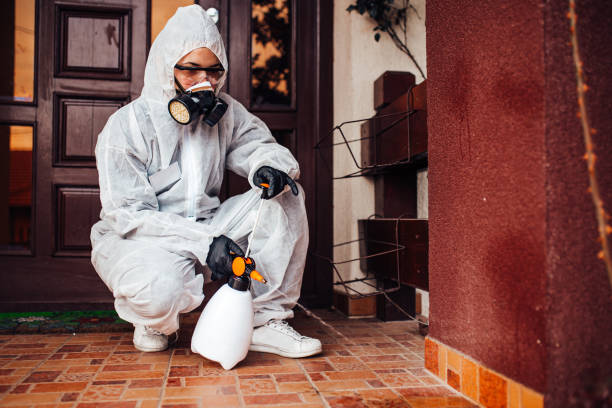
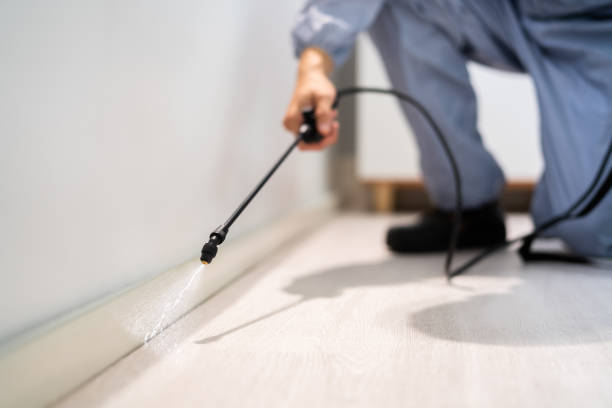
Professional ant control technician inspecting perimeter in Bay, Bay, AR

Why Ant Problems Persist Without Colony-Level Treatment

An ant colony is not a group of individual insects operating independently. It is a structured superorganism built around a reproductive queen, tens of thousands of non-reproductive worker ants organized into foragers, nurses, and defenders, and in many species, multiple satellite colonies connected by pheromone trails that span an entire property and sometimes into neighboring ones.

The workers you see trailing across your kitchen counter are foragers. They represent perhaps 10 to 20 percent of the colony's total population at any given time. The queen, brood, and the majority of workers remain in a concealed harborage location: inside wall voids, under slab edges, in moisture-damaged wood, beneath concrete, in mulch beds, or in the root zones of landscape plantings. When you spray a trail with a repellent pyrethroid, you kill the foragers you can see. The queen detects the chemical disruption through the colony's pheromone communication network and relocates. The colony fractures. You now have two smaller colonies instead of one, both actively establishing new foraging routes, and within three to five days your ant problem is back with different entry points and a bigger population to treat.

Carpenter ants require a separate conversation. Unlike most ant species, carpenter ants do not consume wood. They excavate it, carving smooth-walled galleries and chambers for nesting in wood that is already softened by moisture damage. A carpenter ant infestation is always a structural signal: there is moisture-compromised wood somewhere in the building. The ants are not creating the damage on their own, but they are accelerating it significantly. Treatment for carpenter ants requires locating the nest galleries (often in window sill plates, porch beams, or roof sheathing with moisture exposure), direct void injection with appropriate insecticide, and identifying the moisture source so it can be corrected. Exterior perimeter treatment alone is insufficient for an established carpenter ant infestation inside the structure.

Singer Pest Control's approach begins with species identification, because no two ant species respond to the same treatment protocol. After identifying the species and the likely colony structure, our technicians place non-repellent bait in harborage zones and active foraging corridors, not on open trails where the bait competes with natural food sources. The exterior perimeter receives a non-repellent residual treatment that ants move through without detecting, carrying active ingredient back to the colony. For indoor ant infestations with clear harborage locations such as wall voids or moisture-damaged structural members, direct void treatment is added. Every job closes with a follow-up schedule and a confirmation that the colony has collapsed, not just that the trail has cleared.
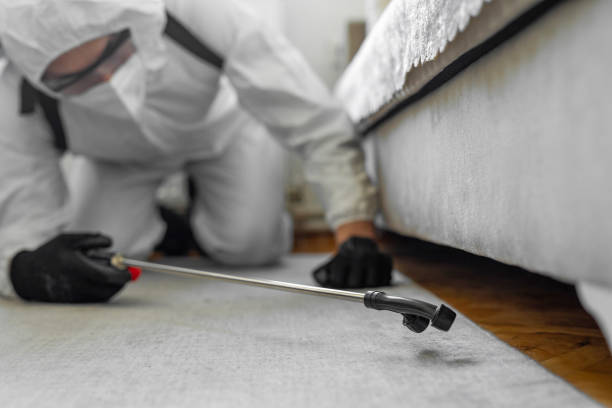
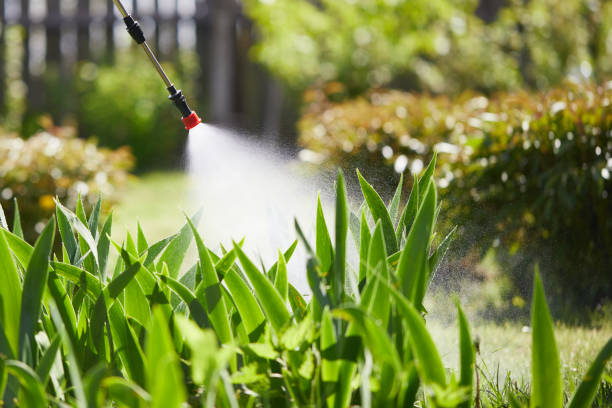
Ant problem in Bay? Call +1-866-315-0243. Same-day service available in most areas of Bay, AR.
What We Treat
Professional Ant Control Services in Bay
🔍

Ant Species Identification and Assessment

Identifying the specific ant species and colony structure before selecting any treatment product or approach. Species determination dictates bait formulation, product selection, and harborage zone targeting. We do not begin treating until we know what we are treating.

⚡

Gel Bait and Granular Bait Application

Professional-grade non-repellent baits placed precisely in harborage zones and foraging corridors for colony-level elimination through bait transfer. Our bait formulations are species-matched and placed in locations that maximize uptake by foraging workers.

🏠

Non-Repellent Perimeter Treatment

Exterior application of non-repellent residual insecticide along the foundation, window frames, and entry points. Foraging ants pass through the treated zone without detecting it, carrying active ingredient back to the colony and spreading it to nestmates through normal contact.

🔨

Carpenter Ant Void Treatment

Inspection for nesting galleries in wood members and void injection treatment for carpenter ant infestations with structural damage risk. Includes identification of moisture conditions supporting the infestation and recommendations for correcting the moisture source.

🌿

Fire Ant Yard Treatment

Broadcast and individual mound treatment for fire ant infestations in lawns and outdoor areas around the property. Fire ants require a two-step approach: broadcast bait that foraging workers carry back to the queen, followed by individual mound treatments for rapid knockdown of active colonies.

📅

Recurring Ant Prevention Program

Quarterly perimeter treatments and interior inspections to maintain ant-free status through seasonal pressure changes. Ant populations in AR peak at different times for different species. A recurring program keeps perimeter barriers active year-round and catches new activity before it establishes indoors.

The Process
How Singer Pest Control Eliminates Ant Colonies
1

Call and Describe What You Are Seeing

Tell us where you are seeing ants, what type (large, small, winged, trail vs. scattered), and for how long. This helps our technician arrive prepared with the right products for the likely species.

2

Technician Arrives in Bay

Our licensed technician arrives at your property in Bay and conducts a full interior and exterior inspection, confirming the species and locating active foraging routes and harborage zones.

3

Species ID and Non-Repellent Treatment Plan

We confirm the species, assess the colony's likely size and structure, and design a treatment plan using non-repellent bait and perimeter products matched to what we found.

4

Bait Placement, Perimeter Treatment, and Follow-Up

Bait is placed in harborage zones, perimeter treatment is applied, and a follow-up inspection is scheduled to confirm colony collapse and address any remaining activity.

Customer Results
What Homeowners in Bay, AR Are Saying
★★★★★

"I had tried four different ant sprays over the summer and the ants always came back within a day or two. The technician identified them as odorous house ants with multiple satellite colonies and placed non-repellent bait in the wall void behind the pantry. Activity dropped about 80 percent within three days, and by two weeks the problem was completely cleared. I finally understood why the sprays were not working."

Homeowner in Bay, AR
★★★★★

"We had massive black ants near a window and assumed they were just big ants. The technician found they were carpenter ants and located moisture-damaged wood in the sill plate beneath that window that they were excavating for nesting. He treated the void, identified the moisture source, and told us exactly what repair to make to stop the damage from continuing. Could not have figured that out on our own."

Homeowner in Bay, AR
★★★★★

"We run a restaurant and had been dealing with tiny ants near the prep area for months despite monthly spray visits from another company. The Singer Pest Control technician found the satellite colony entry point under the floor drain in the prep room. He used a non-repellent treatment that the previous company had not been using at all. Colony was gone within 10 days. Inspections have been clean since."

Restaurant Owner in Bay, AR
Common Questions
Ant Control FAQ for Bay, Bay, AR
Why do ants keep coming back after I spray them in Bay?
Consumer spray products sold in hardware stores almost all contain pyrethrins or pyrethroids, which are repellent insecticides. Repellent products kill the ants you see on contact, but the chemical scent signals the colony to retreat and relocate. The queen moves, the colony fragments, and within a few days to a week the foragers are back from a new direction. Professional ant control uses non-repellent products that ants cannot detect, allowing the active ingredient to spread through the colony and reach the queen via normal contact and food sharing.
What is the difference between carpenter ants and regular ants?
Carpenter ants are significantly larger than most house-infesting ant species, typically measuring between a half inch and three-quarters of an inch. More importantly, carpenter ants excavate wood for nesting rather than eating it. They are attracted to wood that has been softened by moisture, which means a carpenter ant infestation always indicates a moisture problem somewhere in the structure. Regular pavement ants or odorous house ants nest in soil, under concrete, or in wall voids and do not cause structural damage. Carpenter ant treatment requires locating the nesting gallery and addressing the moisture condition, not just treating the exterior perimeter.
How long does it take for ant bait to work?
Professional ant bait typically shows measurable results within 48 to 96 hours for most species, with full colony collapse occurring within one to two weeks. Activity may actually increase slightly in the first 48 hours as workers carry bait aggressively back to the colony. This is a sign the treatment is working, not failing. Fire ant baits work more slowly and may take two to four weeks for full colony collapse because they are broadcast and depend on foragers finding and distributing the product on their own schedule. Carpenter ant infestations with large established galleries may require two treatment cycles.
Are professional ant treatments safe for pets and children?
All products used by Singer Pest Control are EPA-registered for use in and around homes. Our technicians follow manufacturer label requirements for re-entry intervals, which vary by product and application area. We provide specific re-entry timing after every treatment. For households with pets, we avoid placing bait products in areas where pets could access them and use formulations in tamper-resistant placements where appropriate. Indoor spray treatments are applied to cracks, crevices, and perimeter areas rather than open surfaces, and are dry before re-entry. We will explain the specific precautions relevant to your treatment when we arrive.
Do you treat for fire ants in yards in Bay, AR?
Yes. Fire ant treatment in AR involves both broadcast bait application and individual mound treatments depending on the size of the infestation. Broadcast bait is the most effective long-term control method because foraging workers carry it back to the colony and queen. Individual mound treatments provide faster knockdown for mounds near play areas, pet runs, or high-traffic areas. We also inspect for satellite mounds that may not be visible yet since fire ant colonies often have secondary mounds forming underground before they appear at the surface. A single broadcast application followed by individual mound treatment gives the best combination of speed and longevity.
How many treatments does it take to get rid of ants permanently?
Most indoor ant infestations caused by odorous house ants, pavement ants, or small ant species resolve in one to two treatments when combined with a follow-up inspection. Argentine ants, which form large interconnected supercolonies across multiple properties, may require two to three treatment cycles for full resolution because the colony network extends well beyond the treated property. Fire ants in outdoor areas benefit from a recurring seasonal program because AR colonies recover and re-invade from adjacent properties and undeveloped areas. Carpenter ant infestations require treatment plus moisture remediation before the situation fully resolves. We will give you a realistic timeline based on what we find during the inspection.

Ready to Solve Your Ant Problem in Bay?

Singer Pest Control provides same-day ant control service throughout Bay, AR. Colony-level elimination, not just trail control.

📞 Call +1-866-315-0243 Now

Our Services in Bay, AR

Bay is a city in Craighead County, Arkansas, United States. The population was 1,876 at the 2020 census. It is included in the Jonesboro Metropolitan Statistical Area.

Zip Codes in Bay, AR that we also serve: 72411

Cities Close To Bay, AR That We Also Serve


Ant Control Express #1
★ 4.9 (120+ Reviews)
Dispatch Center, AR
Call +1-866-315-0243
Ant Control Express #2
★ 4.9 (120+ Reviews)
Dispatch Center, AR
Call +1-866-315-0243
Ant Control Express #3
★ 4.9 (120+ Reviews)
Dispatch Center, AR
Call +1-866-315-0243
Ant Control Express #4
★ 4.9 (120+ Reviews)
Dispatch Center, AR
Call +1-866-315-0243
Ant Control Express #5
★ 4.9 (120+ Reviews)
Dispatch Center, AR
Call +1-866-315-0243
Ant Control Express #6
★ 4.9 (120+ Reviews)
Dispatch Center, AR
Call +1-866-315-0243
🟢 Techs On Duty in Bay, AR Call +1-866-315-0243