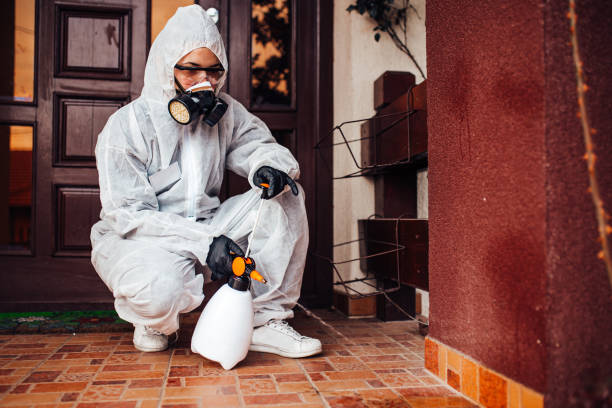
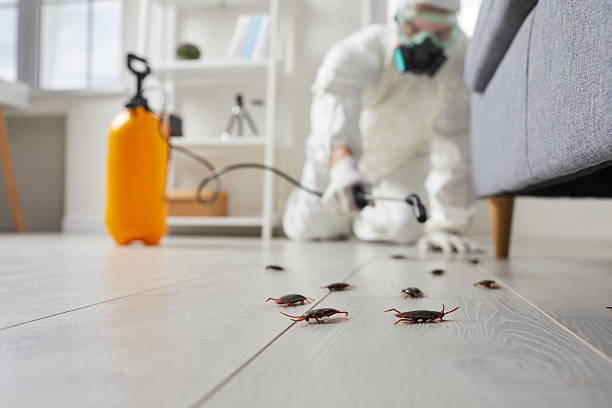
Trapping without exclusion is just a treadmill. Singer Pest Control identifies every entry point, seals them, and eliminates the existing population.
Trapping catches rodents. Exclusion stops new ones from entering. Both are required for a real solution.
Before placing a single trap, your technician maps every gap, crack, and penetration that mice or rats are using to enter the structure. Most homeowners never find all of them on their own. Rodents access buildings through gaps as small as a dime, and those gaps are often in locations that are not obvious: around plumbing penetrations, at HVAC duct connections, along roof fascia, and at the base of garage doors.
We seal identified entry points with rodent-resistant materials: steel mesh, copper wool, expanding foam with deterrent additives, and caulk. Mice cannot chew through steel mesh or copper wool the way they can chew through wood, foam, or standard caulk alone. The materials we use are selected specifically because rodents cannot gnaw through them, which is what makes the fix permanent rather than temporary.
Tamper-resistant bait stations, snap traps, and catch traps are placed strategically based on evidence trails, runways, and droppings mapping documented during the inspection. Trap placement is not random -- it follows the actual movement routes identified by your technician. Stations are locked and tamper-resistant, keeping product out of reach of children and pets while remaining accessible to rodents along their established travel corridors.
Return visits check bait stations for activity, confirm no new entry points have opened, and verify the population is declining as expected. We do not trap and leave. A pest control company that places traps and does not return has no way to know whether the problem is resolved or whether the rodents found a new entry point. Our monitoring visits provide that confirmation and catch any emerging issues before they become infestations again.
Setting a snap trap and catching a mouse feels like progress. And it is, briefly. But if the gap in the foundation that mouse came through is still open, there is a replacement mouse two days later. This is the trap-and-replace cycle that homeowners get stuck in for months or years without understanding why it never ends. The answer is exclusion, and it is what separates a rodent control service that works from one that keeps you calling back.
Mice can enter a structure through any gap of approximately one quarter inch or larger -- roughly the diameter of a dime. Rats require a slightly larger opening, but not by much. The most common entry points are not the ones people think to look for. Gaps around plumbing pipes where they pass through walls or floors. Gaps where HVAC ducts connect to exterior walls or attic space. Weep holes in brick veneer that were never sealed. Gaps along roof fascia where the wood has pulled slightly away from the structure. Garage door bottom seals that have dried out and cracked. Conduit penetrations for electrical or cable that were sealed with standard caulk a rodent can chew through in minutes.
An experienced inspector reads the physical evidence of rodent activity before placing any trap: runways, which are the dark grease marks rodents leave along the walls they travel repeatedly; droppings, which identify the species and estimate the size of the population; gnaw marks, which show where and what they are eating; and nesting material, which locates where the population is sheltering. This evidence mapping is what makes trap placement effective instead of random.
The health risks of a rodent infestation extend well beyond property damage. Hantavirus, transmitted through contact with rodent droppings or urine, is a serious respiratory illness. Salmonella contamination of kitchen surfaces occurs when rodents travel across food preparation areas overnight. Leptospirosis can be transmitted through rodent urine contaminating water sources. These are not remote risks for a home with an active infestation -- they are active hazards that escalate with population size and duration.
One female mouse produces five to ten litters per year, with six to eight pups per litter. A pair of mice in your home in January is a colony by March if nothing is done. Every week of delay is a population multiplication event. Exclusion stops that math at the source: once the entry points are sealed, no new animals are entering, and the existing population can be fully eliminated with trapping rather than constantly replenished from outside.
Singer Pest Control's process starts with a full property inspection, produces a written entry point report with every identified gap documented, performs exclusion work before population control, and schedules monitoring visits to confirm the result. The exclusion work is not optional and it is not an upsell -- it is the reason the treatment is permanent. Without it, you are just resetting the trap.
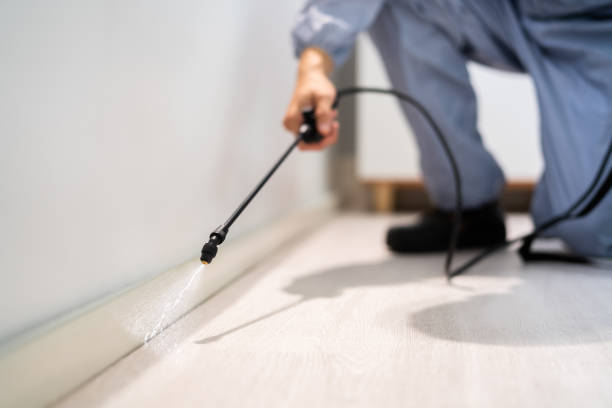
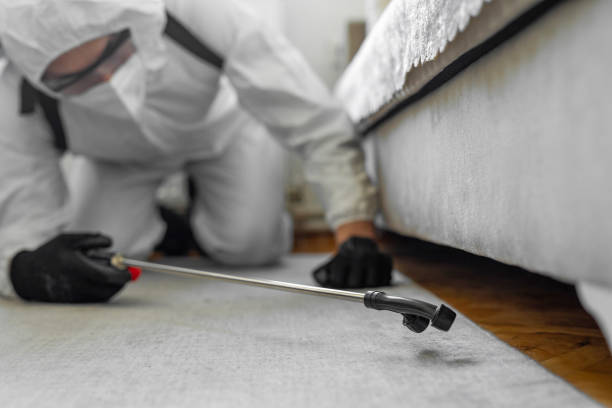
Every service is built around the exclusion-first principle that makes results last.

Full property assessment identifying all rodent evidence, active runways, nesting sites, and entry points with a written report. You receive a documented list of every gap we found, where it is located, and our recommended material for sealing it. This report is yours to keep regardless of whether you proceed with exclusion work.

Sealing all identified entry points with steel mesh, copper wool, and rodent-resistant materials that mice and rats cannot chew through. Exclusion is performed before trapping begins so that the only rodents remaining inside are ones we can catch -- not ones that are still coming in from outside. We document every sealed point for your records.

Strategic placement of locked, tamper-resistant bait stations along identified rodent runways for population elimination. Stations are positioned based on evidence mapping during the inspection -- along wall travel corridors, near nesting sites, and at confirmed points of access within the structure. Follow-up visits confirm activity and replenish bait as needed.

Interior trap placement based on evidence mapping, with scheduled follow-up visits to check activity and remove captured rodents. Snap traps are positioned at primary travel corridors based on runway evidence and droppings mapping. We return on a set schedule to check, remove, and reset -- you do not need to handle the traps.

Specialized treatment for attic and subfloor infestations, including assessment of contaminated insulation when needed. Attic infestations frequently involve nesting in insulation, which requires removal and replacement once the population is eliminated. We assess the extent of contamination and provide a clear scope of what is needed before any work begins.
Ongoing rodent programs for restaurants, food-processing facilities, warehouses, and multi-unit residential properties requiring documentation. Commercial programs include scheduled service visits, written documentation of all activity and treatments, and consultation on structural issues contributing to rodent pressure. All documentation is inspection-ready.
Inspection, documentation, exclusion, elimination -- in that order.
Call +1-866-315-0243 and tell us what you have noticed: droppings, sounds, sightings, gnaw marks. This helps us dispatch the right technician and bring the right materials for your type of structure and likely rodent species.
Your inspector maps rodent evidence throughout the property, identifies every entry point, and produces a written report with documented findings. You see exactly what was found, where, and what is recommended before any treatment decision is made.
We review the findings with you, explain the exclusion materials we recommend for each identified gap, and confirm the plan before work begins. Exclusion scope and cost are agreed upon in writing before we seal anything.
Entry points are sealed, traps and bait stations are placed based on evidence mapping, and monitoring visits are scheduled. We return on a set schedule to confirm activity is declining, remove captured rodents, and verify no new entry has occurred. The job is not closed until the population is confirmed eliminated.
"I had snap traps set for three months straight. I was catching one or two mice every week without any reduction in activity. I thought the problem was just the size of the infestation. When Singer Pest Control came out, the inspector found 11 separate entry points around the foundation, the garage, and the roofline. After the exclusion work was done and bait stations were placed, the trap activity dropped to zero within two weeks. I had been fighting the symptom, not the source."
"We had a new baby and I was very nervous about rodent bait stations in the house. The technician from Singer Pest Control took the time to explain exactly which products were in the bait stations, how the tamper-resistant housing prevents any access from a child, and where each station was being placed and why. That level of transparency made a real difference. The problem was resolved, and I never felt like we were trading a rodent problem for a chemical exposure problem."
"A camera caught a rat in the kitchen the night before I had a health inspection scheduled for 10 days out. I called Singer Pest Control first thing the next morning. They came after closing that night, found the entry point behind the dishwasher where a pipe penetration had never been properly sealed, closed it with steel mesh, and placed commercial bait stations in the utility corridor. We passed the health inspection with no rodent findings. Everything they did was documented, which I had ready if the inspector asked."
Call Singer Pest Control for a same-day or next-day inspection in Gastonville. We find the entry points, seal them, and eliminate the population. One call ends the treadmill.
Call +1-866-315-0243