Cockroach sprays only kill what you can see. Singer Pest Control treats the harborage zones where colonies actually live and breed.
Killing what you can see in the open only addresses a fraction of the population. The colony lives where the spray never reaches.
Cockroaches live in the warm, dark, humid zones behind appliances, inside wall voids, under sinks, and inside electrical panels. They surface to feed but return to these zones to rest and breed. We find the actual colony, not just where individual cockroaches appear. Without treating harborage zones, no amount of surface spraying reduces the underlying population permanently.
Professional gel baits work through transfer: cockroaches consume the bait, return to the harborage zone, and pass the active ingredient through contact and cannibalism to the broader population. Store-bought baits use diluted active ingredient concentrations and are formulated for retail shelf life, not population elimination. The professional-grade gel baits we use are not available over the counter, and their placement inside harborage zones makes them dramatically more effective than a bait station left in an open cabinet corner.
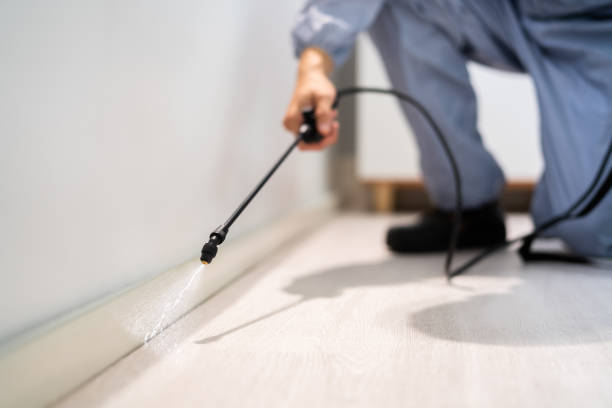
EPA-registered residual insecticides applied precisely along wall-floor joints, behind appliances, and inside cabinet hinges where cockroaches travel and rest between feeding trips. Residual application in travel corridors means that cockroaches moving through those zones after treatment come into contact with the active ingredient even when they are not directly sprayed. The combination of gel bait in harborage zones and residual in travel corridors creates a layered treatment with no escape routes.
After treatment, your technician provides specific recommendations to address the moisture sources, food access points, and structural gaps that allowed the infestation to establish. A cockroach infestation does not persist in a space for no reason -- there are conditions that make the environment hospitable. Addressing those conditions is what makes the treatment result durable. We tell you specifically what we found and what changes would reduce the likelihood of reinfestation, not just generic advice.

Not all cockroaches are the same pest, and treatment approach varies significantly by species. German cockroaches -- the small ones commonly found in kitchens and bathrooms -- are the most difficult domestic cockroach species to eliminate. They thrive in warm, humid environments close to food and water, breed rapidly, and produce egg cases called oothecae that are resistant to most spray insecticides. A single female German cockroach can produce four to eight oothecae in her lifetime, each containing 30 to 40 eggs. At full reproductive rate, a small infestation becomes a large one within weeks.
American cockroaches -- the large, reddish-brown ones -- tend to enter from outside through drains, utility penetrations, and exterior gaps. They prefer moist areas like basements, crawl spaces, and utility rooms. Oriental cockroaches are found in cool, damp environments and are often associated with drainage systems and exterior perimeters. Each species requires a different inspection focus and different treatment emphasis. Professional identification of which species is present is the first step in building an effective treatment plan.
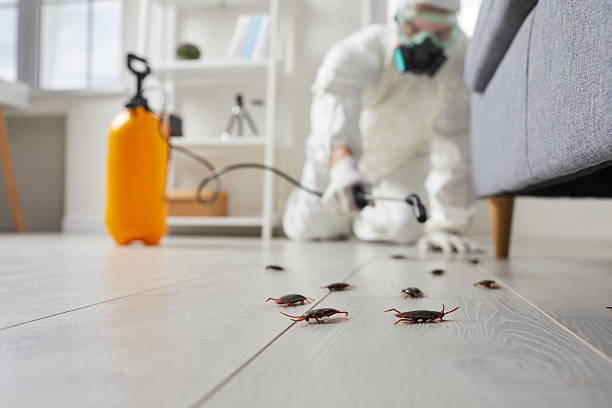
The reason DIY sprays fail is straightforward: cockroaches do not spend most of their time in open areas where a spray can reach them. They are nocturnal. The cockroaches you see moving across a counter at 2am are a fraction of the population. The rest are inside wall voids, behind the compressor motor of the refrigerator, inside cabinet hinge channels, underneath dishwashers, and within the internal structure of kitchen appliances. A spray can delivers product to surfaces. It cannot penetrate voids and it cannot follow a cockroach into its harborage zone. The eggs inside an ootheca are completely protected from surface sprays.
Professional gel bait works because cockroaches carry the active ingredient back to the colony through direct contact and through cannibalism of contaminated individuals. When gel bait is placed correctly, inside the actual harborage zones rather than in open areas, the population collapse begins from within. Void injection -- delivering insecticide dust or foam into wall voids and attic cavities -- extends treatment into the spaces a technician cannot see but a cockroach most certainly uses.
The combination of accurate harborage mapping, professional gel bait placed inside those zones, crack-and-crevice residual in travel corridors, and void injection where warranted is what produces the kind of result that lasts. Singer Pest Control technicians in Hiawatha are trained to inspect with intention -- not just looking for where cockroaches appear, but identifying the warm, humid, dark zones where the colony is actually established. After treatment, we schedule follow-up visits to verify the bait is being taken, rebait as needed, and confirm the infestation is fully resolved before the job is closed.
Every service is focused on the colony, not just the individuals you can see.

Full inspection identifying all cockroach activity, harborage zones, and conducive conditions, with a documented treatment plan specific to your property. We identify the species present, map every harborage zone, and document conducive conditions before any product is applied. You understand the plan before treatment begins.

Precise placement of professional-grade gel baits inside harborage zones for colony-level elimination through bait transfer. Gel bait is placed in the locations where cockroaches actually live -- not on open surfaces where they briefly travel. The transfer mechanism means the active ingredient reaches the parts of the colony that never come into direct contact with treatment.

EPA-registered residual insecticides applied into wall-floor joints, appliance gaps, and cabinet interiors for sustained activity. Residual treatment creates a chemical barrier along the corridors cockroaches travel between harborage zones and feeding areas. The active ingredient persists for weeks, affecting cockroaches that travel through treated areas after the technician has left.

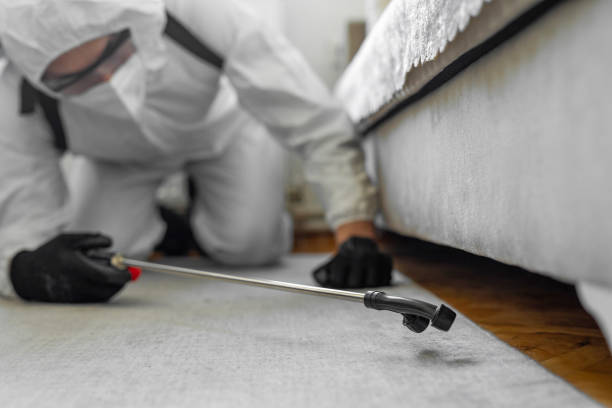
Injection of insecticide foam or dust into wall voids and attic cavities where cockroach colonies establish beyond surface access. Void injection is used when inspection identifies harborage activity inside walls -- a common scenario in kitchens with plumbing walls and in infestations that have been untreated long enough to spread beyond accessible surfaces. This is a treatment method most DIY approaches cannot replicate.

Intensive treatment and monitoring program for restaurant kitchens, food service facilities, and commercial properties with zero tolerance for cockroach activity. Commercial programs include after-hours service to minimize operational disruption, treatment documentation suitable for health inspection review, and scheduled monitoring visits to maintain compliance. We treat the specific harborage zones that commercial kitchen layouts create around cooking equipment, grease traps, and floor drains.
Scheduled return visits to assess treatment effectiveness, rebait as needed, and verify the infestation is fully resolved. We check gel bait placement, confirm it is being taken, replace depleted bait, and look for any signs of surviving harborage activity. The job is not declared complete until the population is confirmed gone, not just reduced. Follow-up visits are built into our cockroach service, not billed separately.
Four steps to a confirmed, colony-level resolution.
Describe what you are seeing: where you spot them, how often, and how long the problem has been going on. This helps us determine the likely species and schedule the right technician with the right products for your service call.
Your technician conducts a thorough inspection, identifies the cockroach species, maps all harborage zones, and documents conducive conditions. You receive a clear explanation of what was found and why the infestation established before any treatment begins.
Based on the inspection, we develop a treatment plan targeting the specific harborage zones identified. The plan includes gel bait placement, crack-and-crevice residual application, and void injection where warranted. We explain the plan to you before proceeding.
Treatment is performed, and follow-up visits are scheduled. We return to verify the gel bait is being consumed, rebait as needed, and confirm the population is declining. The job is not closed until the infestation is resolved and we have documentation to confirm it.
"I had been spraying every product from the hardware store for two months and the cockroaches kept coming back within a week of each treatment. The technician from Singer Pest Control explained that the colony was living behind my refrigerator, inside the compressor motor housing -- somewhere I would never spray and somewhere the cockroaches knew was safe from what I was doing. He placed gel bait inside the motor housing and along the back wall behind the unit. After two follow-up visits, the activity was completely gone. The problem was in the one spot I never checked."
"We had been on a monthly plan with a large national pest control company for over a year. Cockroach activity never fully went away. When I switched to Singer Pest Control, the technician found void access points in the kitchen plumbing wall that the previous company had never treated. He injected foam into the void and placed gel bait along the back of the lower cabinet run. Within two weeks the activity was down dramatically, and we had our first clean health inspection in over a year. The difference was that the new technician actually looked for where they were living, not just where they were appearing."
"I kept finding cockroaches around my dryer and couldn't figure out where they were coming from. Singer Pest Control identified that the dryer vent duct passing through the exterior wall had a gap around it where the building's structure met the duct housing -- a gap behind the dryer that I could not see without moving the machine. The technician treated the immediate area, documented the structural gap origin, and I used the report to get my landlord to address the building-side issue. The follow-up visit three weeks later confirmed the problem was resolved."
Call Singer Pest Control today. We serve Hiawatha and throughout Hiawatha, KS with same-day inspections available. Get to the source of the problem -- not just the symptom.
Call +1-866-315-0243